US Military Confirms Iran War Has Caused Ammunition Shortfalls
The United States military is facing strategic ammunition shortfalls following months of war against Iran, with the Pentagon’s Office of Inspector General warning that the conflict has exposed significant bottlenecks in the country’s defence industrial base.
In a mandatory report to Congress released Monday, the Inspector General said Operation Epic Fury, the US name for its joint military campaign with Israel against Iran, cost an estimated $33.4 billion between February 28 and June 30.
Of that amount, $22.3 billion was spent on munitions used during the operation.
“The munitions expenditure on OEF has resulted in strategic inventory shortfalls and revealed industrial base bottlenecks for munitions resupply,” the report said.
The Pentagon, according to the report, is responding by streamlining procurement procedures, reducing production lead times and stockpiling critical materials, components and selected munitions.
However, it noted that expanding production capacity would require significant time.
The development could raise concerns among countries that depend on US weapons supplies, particularly Ukraine and Taiwan.
Ukraine requires additional interceptor missiles for its US-made Patriot air defence systems in its war with Russia, while Taiwan relies on American arms agreements to strengthen its defence against China.
The report contrasts with President Donald Trump’s repeated dismissal of concerns over depleted US weapons stocks.
Trump recently said the United States had “virtually unlimited” ammunition and claimed that the country was producing more sophisticated weapons than at any point in its history.
The Inspector General’s report also detailed losses suffered by the US military during the conflict, including four F-15 fighter jets destroyed, one F-35 damaged, seven KC-135 tanker aircraft damaged and as many as 30 MQ-9 Reaper drones destroyed.
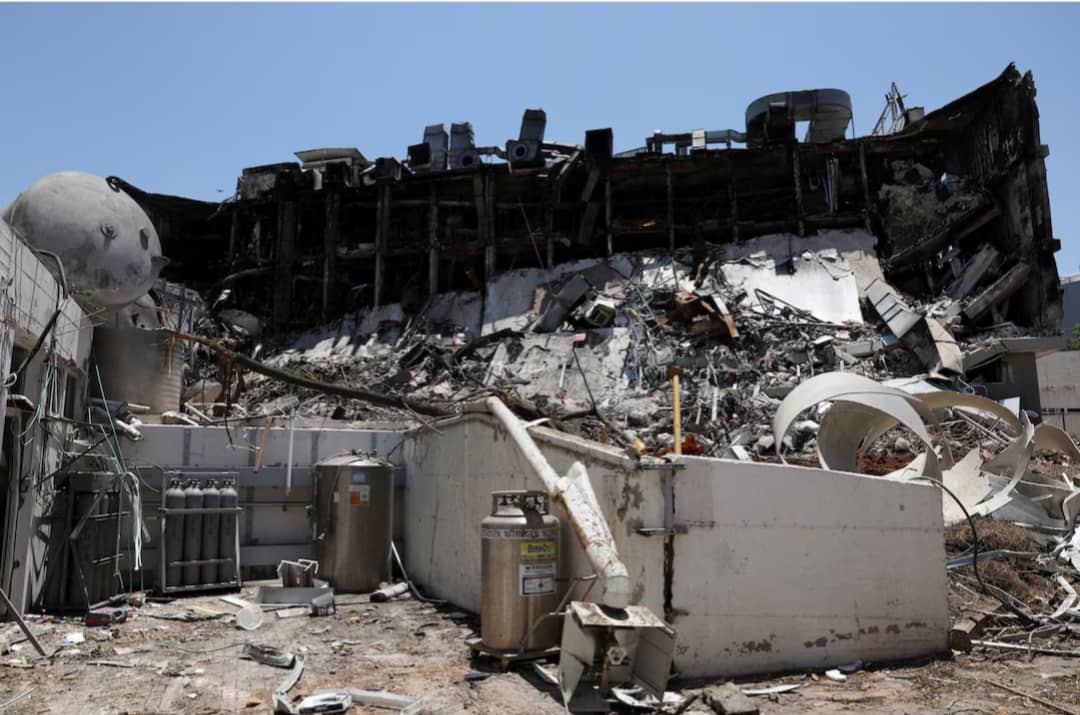
It further confirmed that Iran targeted the US Navy’s main regional logistics hub in Bahrain with drone and ballistic missile strikes.
Hundreds of buildings and other structures at US bases across Kuwait, Bahrain, Qatar, the United Arab Emirates, Saudi Arabia, Iraq, Oman and Jordan were also damaged or destroyed.
The report estimated that the conflict had resulted in seven US service members being killed in action and another seven dying in non-hostile incidents.
A further 417 personnel were wounded in action.
The United States and Israel launched the war against Iran on February 28.
Western powers have for decades accused Tehran of seeking to develop nuclear weapons, an allegation Iran has consistently denied.
Tighten the military losses paragraph